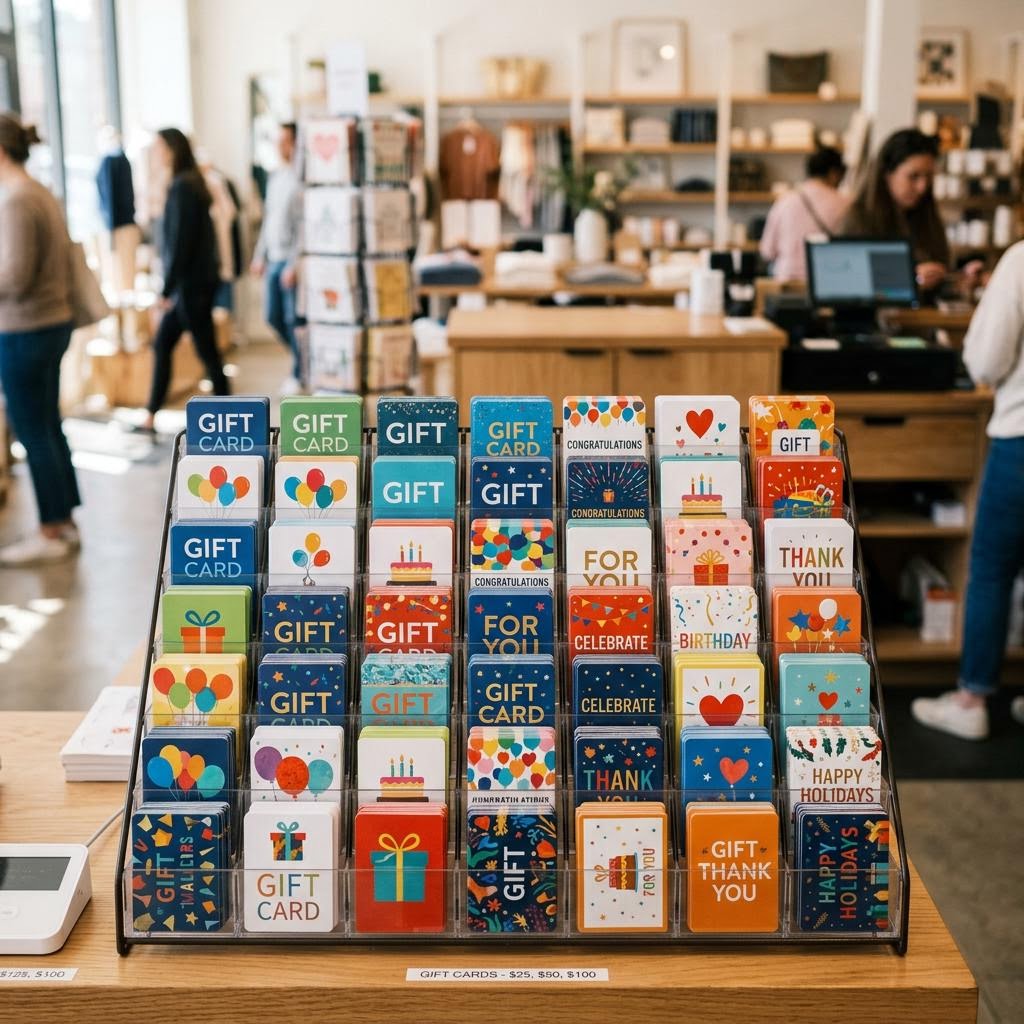
The card is a claim, not a container
The single most useful thing to understand about a gift card is that no money is stored on it. The card carries an account number. Your balance lives in a database operated by the issuer, and the card is simply the credential that unlocks the right row in that database. This is why a scratched or bent card still works if the number is legible, and why a perfectly intact card is worthless once the number has been copied by someone else.
It also reframes what you bought. You did not buy fifty dollars. You bought a promise from a company to accept a fifty-dollar claim against future goods, on terms they wrote and can partly revise. That promise is worth exactly as much as the company behind it, which is a distinction that matters enormously when a retailer files for bankruptcy.
Who is holding the cash in the meantime
When you pay at the register, the money does not sit in escrow waiting for the recipient. For a merchant-branded card, the retailer takes the cash immediately and books it as a liability — an obligation to deliver goods later. In accounting terms nothing has been earned yet, but in cash-flow terms the retailer has your money now and owes you merchandise at some unspecified future date.
That gap is valuable, and the industry knows precisely how valuable. Money held between purchase and redemption is called float. At scale, across a holiday season, it is an enormous interest-free loan from customers to retailers. This is not sinister on its own — it is the ordinary economics of prepayment — but it does explain why every checkout lane in America has a gift card rack near it.
Why the issuer is often not the retailer
For a card carrying a payment-network logo, the arrangement is different and more crowded. A bank issues the card, a programme manager runs the platform, a processor moves the transactions, and the shop that sold it to you is just a distributor taking a slice. None of those parties considers itself your customer service department, which is why disputes on these cards get passed around.
This matters for a practical reason. When something goes wrong, the entity you need is whoever is named on the back of the card, not the store where you bought it. Retail staff generally cannot see your balance, cannot reverse a charge, and cannot reissue the card. Working out who the actual issuer is, before you need them, saves a great deal of time.
What happens when the retailer fails
Because your card is an unsecured claim, a bankruptcy puts you in line with other unsecured creditors — and cardholders are rarely near the front of that line. In practice, retailers entering Chapter 11 frequently keep honouring cards for a period, sometimes under court supervision, because refusing would destroy what goodwill remains. Then, often abruptly, they stop.
The pattern is consistent enough to act on. If a chain is closing stores, missing payments, or dominating the retail press for the wrong reasons, spend the card. Waiting for the perfect purchase is how balances become press releases about creditor claims processes. A card in a drawer during a bankruptcy is a bet you have no way to hedge.
The protections you do not have
Most people assume a gift card carries something like the fraud protection on their debit card. It generally does not. The federal rules that give you error resolution rights and cap your liability on a compromised debit or prepaid account were written with those accounts in mind, and store gift cards and gift certificates are specifically carved out of the prepaid account rules.
The consequence is stark. If someone drains your gift card, there is usually no statutory dispute process compelling anyone to make you whole. What you have instead is the issuer’s own goodwill policy, which is discretionary, inconsistent, and far easier to invoke if you kept the receipt. Treat a gift card as closer to cash than to a bank card, because legally that is nearer the truth.