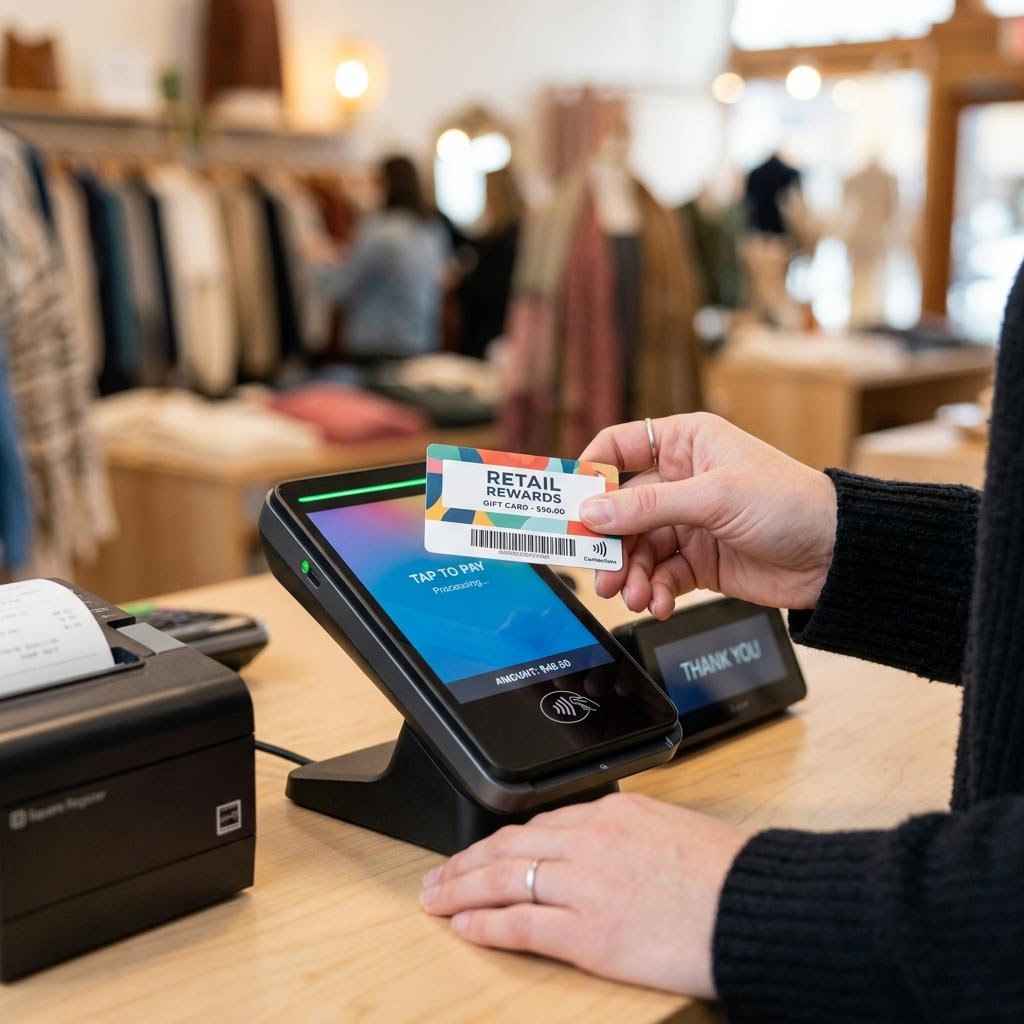
What the scan actually does
Before activation, a card on the rack is inert. The account exists in the issuer’s system with a zero balance, which is precisely why racks can sit unattended in public. When the cashier scans the barcode and the payment clears, the register sends an authorisation to the issuer, the issuer loads the amount against that account number, and the card becomes spendable.
The important detail is that this is a live round trip to a third party, not a local operation. The register is talking to a processor which is talking to the issuer. Any link in that chain can time out, and when it does, you can end up having paid for a card that was never funded.
The three ways it goes wrong
The first failure is the clean one: activation declines outright, the cashier sees an error, and the card is voided in front of you. Annoying, but self-correcting. The second is worse — the network times out after your payment was captured, leaving the store paid and the card unfunded. The third is subtlest: the wrong amount loads, usually on a variable-load card where someone keyed the value by hand.
All three are recoverable, and all three are recoverable only with the receipt. The receipt ties a specific card number to a specific paid transaction at a specific terminal and time. Without it you are asking a call centre to take your word for the existence of money. With it, you are pointing at their own log.
What to do before you leave the counter
Ask the cashier to confirm the activation succeeded and that the printed receipt shows the loaded amount. On variable-load cards, read the number back. Thirty seconds of checking at the counter replaces what is otherwise a week of phone calls, and the staff member who ran the transaction is the one witness who will never be available again.
Then keep the receipt with the card, not in your pocket. The most common way this goes badly is not a technical failure at all — it is a card given as a gift three weeks later, with the receipt long since discarded, and nobody able to prove what was loaded.
Why online activation has a different shape
Digital cards skip the register but not the risk. The load happens server-side and usually succeeds, but delivery is now the weak point: codes go to mistyped addresses, land in spam folders, or get held by fraud screening for hours or days while the retailer checks that your order is not stolen-card testing.
That hold is worth knowing about before you rely on an e-card as a last-minute gift. "Instant delivery" is the marketing claim, not a commitment. First-time buyers, large orders, and mismatched billing addresses are the combinations most likely to be queued for review, and no amount of calling speeds that up.
The tampering problem activation creates
There is a darker consequence of the activation model. Because cards sit on open racks with zero balance, a thief can lift several, record the numbers and PINs, reseal the packaging, and put them back. They then poll those account numbers until one shows a balance — the moment you activate it — and spend it within minutes.
From the issuer’s side this looks like a normal redemption using valid credentials, which is why these claims are so often refused. The defence is entirely at the rack: take cards from the back, reject any with scratched PIN panels, misaligned packaging, or scuffed adhesive, and prefer cards kept behind the counter.