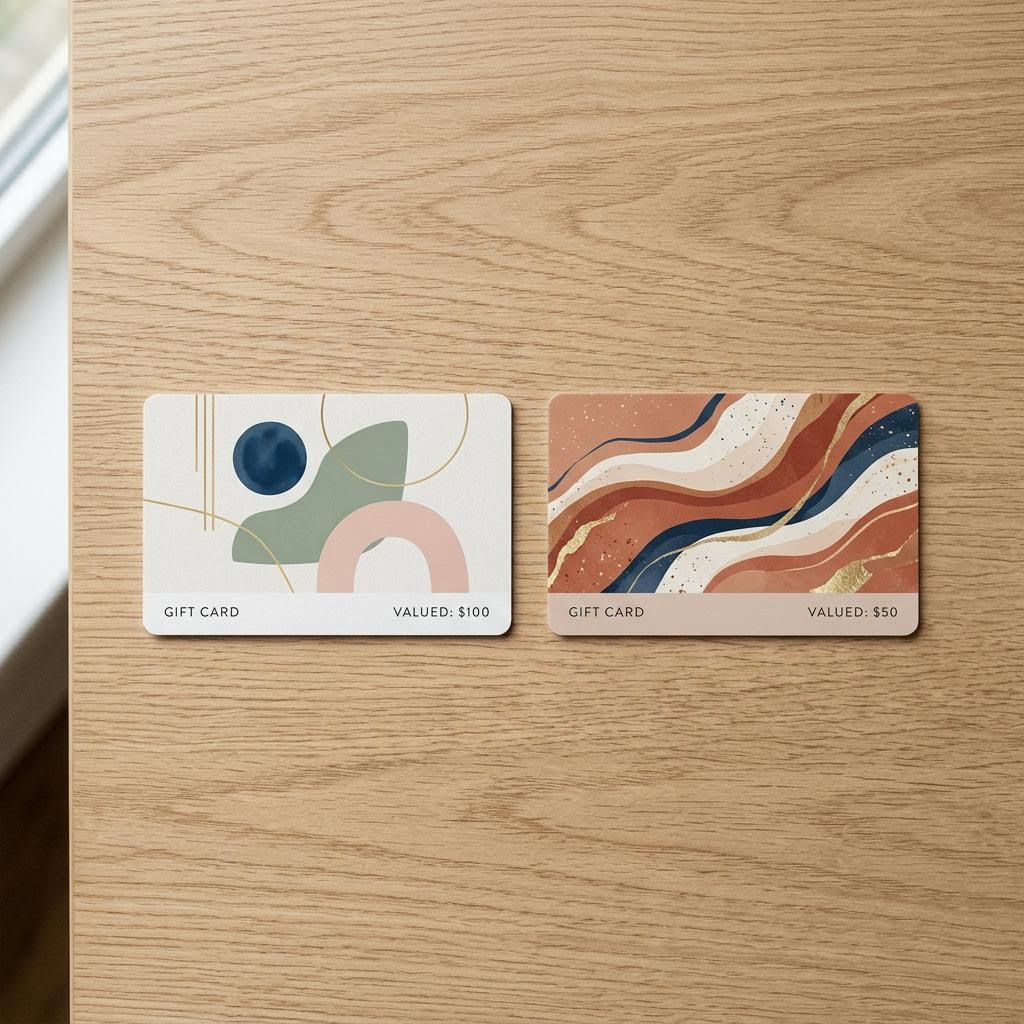
The problem with round numbers
Fifty dollars is a socially legible amount and a poor functional one. Almost nothing costs fifty dollars, so the recipient buys something for thirty-eight and holds a twelve-dollar remainder that is too small to be useful and too large to ignore. That remainder is where breakage lives.
The industry is not unhappy about this. Small residual balances are the least likely value to be redeemed per dollar outstanding, which makes round-number gifting quietly profitable for issuers. You cannot change the economics, but you can decline to contribute to them.
Anchor the amount to a purchase
Instead of picking a number that sounds right, picture what the person will buy and price it. If the intent is a book, cover a hardback and a coffee. If it is a meal for two, cover the meal plus a modest tip margin. If it is a specific product, cover the product plus a few dollars of slack rather than landing just underneath it.
That last point is the common own-goal: a card that falls slightly short of the obvious purchase forces the recipient to top up, which converts a gift into a part-payment. Overshooting the target price by a small margin is far better than undershooting it by any margin.
Where the social floor and ceiling sit
Amounts have meaning and it is worth being unromantic about it. Very small amounts on a card read as an afterthought in a way the same amount in cash does not, because the card advertises the number. Below roughly the price of a single ordinary item at that retailer, a card is doing you no favours.
At the upper end, large amounts on a single-retailer card concentrate risk badly — insolvency, loss, and dormancy all scale with the balance. Above a certain point, splitting across two brands or simply giving cash is the more considerate choice, even if it presents less impressively.
Multiple small cards versus one large one
Several smaller cards look generous and behave badly. Each one carries its own residual, its own dormancy clock, and its own chance of being mislaid, so the total unredeemed value tends to be higher than with a single card of the same face value.
The exception is deliberate variety — one card for a treat and one for something practical, chosen because they serve different purposes. That is a considered gift. Four cards at the same retailer is not; it is one card divided into four opportunities to lose money.
Say the awkward part out loud
When you hand the card over, mention two things: roughly what you had in mind, and any clause that matters. "There is enough here for the hardback and a coffee" makes the amount legible as a plan rather than a valuation. "This one has an inactivity fee after a year" is information only you have.
That second sentence is the one people skip because it feels unromantic. The recipient never saw the packaging and has no way to know. Telling them is the difference between a gift that works and one that quietly shrinks in a drawer.